
Heartworm Prevention: Do We Really Need This and Is It Safe?
By now, if you have ever had a pet before, I am sure you have heard of heartworm disease. Pet ownership and monthly preventatives pretty much go hand in hand (or at least I hope they do!) but how far does your knowledge of the disease, it’s history, and it’s treatment and prevention go beyond that? Let’s take a look at some facts that maybe you haven’t heard of yet!
A Tale as Old as Time
Heartworm disease is really a tale as old as time. One of the earliest accounts dates back to 1626 when Francesco Birago documented “worms in the heart” of hunting dogs in Northern Italy. Since then, heartworms have been documented in dogs around the world and in 1921 the first case of feline heartworm disease was reported in Brazil.
It wasn’t until 1977 that the first preventative was approved for use. This needed to be given daily and could have deadly reactions, especially if it was given to a heartworm positive dog. In 1970 the bacterium Streptomyces avermitilis was found in Japanese soil that appeared to have new and potent bioactivity against parasites. The new compound was named “avermectin’ and collaborative research led to the development of the extremely safe and even more effective ‘ivermectin’ derivative which became the first once monthly heartworm prevention on the market in 1981. Since then, this “wonder drug” has saved countless lives both animal and human.
So How Does My Dog Get Heartworms?
You may know that heartworms are spread to the dog and cat through mosquitoes, but did you know that human infection is possible?! While this is quite rare it is possible that humans could contract heartworms from mosquitoes. They cannot mature into an adult worm like in the dog and cat but they can cause nodules in the lungs, chest pain, or fever and could even be mistaken for a cancerous growth!
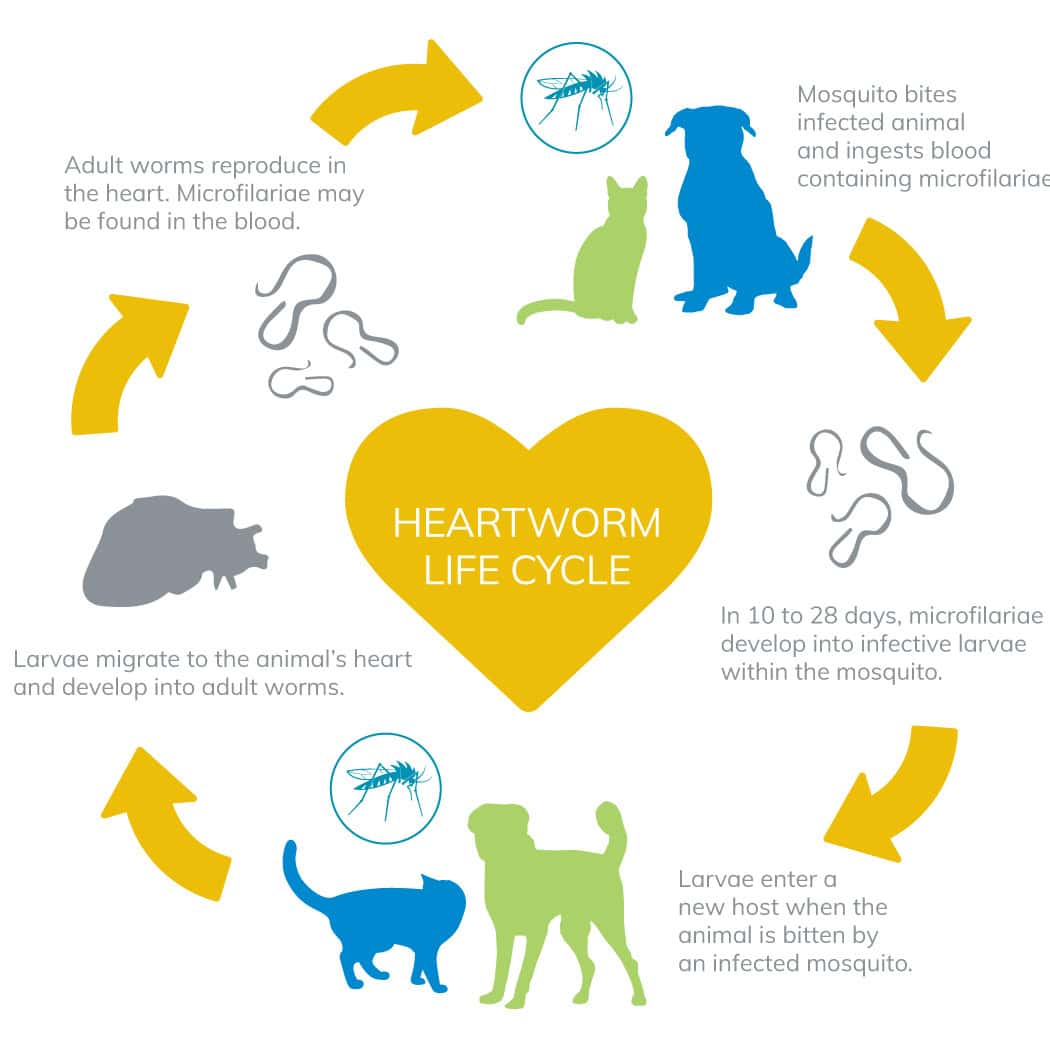
Dogs and cats do not transfer heartworms to each other. In order to be infected:
- a mosquito feeds on an animal who is positive already and picks up baby heartworms from their blood.
- Those then mature into an infectious stage and then that mosquito deposits them into the blood of their victim.
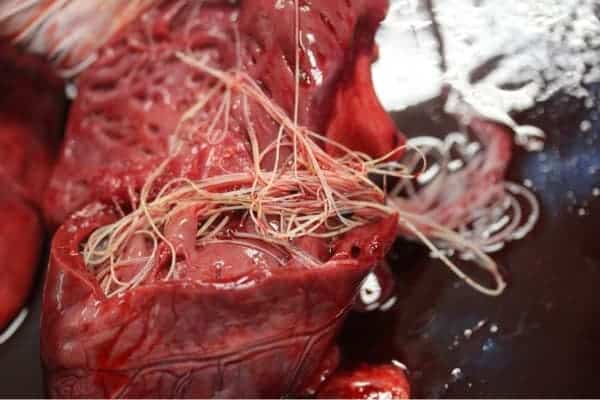
- From here, those babies grow into adults over the course of about 6 months and reside in the large vessels of the heart and lungs.
- Once there, they cause damage to the vessels and obstruct blood flow.
Without treatment, dogs can die suddenly or go on to develop Caval syndrome, a devastating failure of their heart and lungs which is untreatable. When caught early enough, treatment includes almost a full year of oral medications, painful expensive injections, and restricted activity. Cats generally do not house the same volume of adult worms in their vessels. They unfortunately either die suddenly without symptoms or develop lifelong respiratory illness needing chronic medications. There is no treatment available to cure cats of heartworm disease.
So What’s New in the World of Heartworm Disease?
We have come a long way since 1977 with improved safety and convenience of heartworm preventatives. Ivermectin is still a big name in the world of heartworm prevention but resistance to this drug is being seen. Resistance was first reported around 2005 and is mostly isolated to the Lower Mississippi Delta region, although there is concern of spread. In our area, Ivermectin-based preventatives are still effective and recommended as an extremely safe and proven option for dogs. There are however, other drugs on the market, all with great safety profiles that can be chosen based on price, preference, or ease of administration.
The most important part of prevention is not missing doses! I know in our hectic lives this can be easily forgotten about! Proheart-12 is a once-a-year injection that safely prevents heartworms all year long without the need to mark your calendars or run to the vet for refills. Because of the concern for growing resistance, annual heartworm tests are essential to be sure the products are working as intended and are a legal requirement for the prescription of heartworm prevention. When purchased from a reputable source like your veterinary office, if your dog becomes heartworm positive despite monthly preventative administration, the companies of these products will pay for heartworm treatment!
So if you’re queasy or nervous about the idea of giving your pet medications every month or annual injections I can understand your hesitance and appreciate the deep love and care you have for your pet. I hope this helps to reassure you of the safe, widespread, and incredibly long history we have with heartworm preventatives and how this small act of preparedness will prevent them from potential pain and suffering of contracting the disease.
Lindsay Baker, DVM