
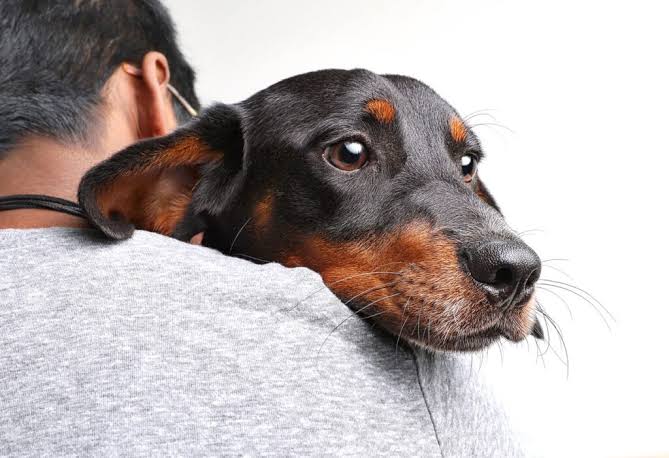
Fear-Free Veterinary Visits, Part 2: Managing Pet Anxiety During Your Visit
For many pets, walking through the doors of a veterinary hospital can be overwhelming. New smells, unfamiliar sounds, other animals, and being handled by people they don’t know can all create fear and anxiety during their visit.
That’s why Fear-Free veterinary visits aren’t simply about getting through an examination. It’s about understanding how a pet is feeling and finding ways to make the experience as comfortable and positive as possible. The “just get it done” mentality simply does not work. We can do better for you and for your pets.
At our hospital, we believe every pet deserves to be treated as an individual. Some pets may happily walk into an exam room and look for treats, while others need more time, patience, and reassurance. Every month, our staff takes part in Fear Free Certified training. We are continuously learning new techniques and discussing what practices we can utilize to enhance the visit for each pet we see.
We firmly beleive that low stress handling results in better medical care for your pet. This means more happy years together.
Here are some of the ways our veterinary team works to create a better experience by decreasing fear and anxiety during their visit.
Giving Pets Time to Adjust
When a pet arrives at the hospital, we don’t always want to jump immediately into an examination.
Some pets benefit from having a few minutes to explore their surroundings, sniff the room, and become comfortable with the people around them.
Taking a little extra time at the beginning of a visit can help prevent anxiety from building and may make the rest of the appointment much easier.
Sometimes, patience is one of the most important tools we have.
Reading Your Pet’s Body Language
Pets can’t tell us when they’re nervous, but they communicate through their body language.
Our veterinary team watches for subtle signs of fear, anxiety, and stress, including:
- Tucked tails or flattened ears
- Trembling or panting
- Lip licking or yawning
- Avoiding eye contact
- Hiding or trying to move away
- Becoming unusually still or withdrawn
- Growling, hissing, or other defensive behaviors
Recognizing these signals allows us to adjust our approach before a pet becomes overwhelmed. Take a look at this chart developed by the leading Fear Free professionals which guides best practices in our approach to handling different levels of stress:
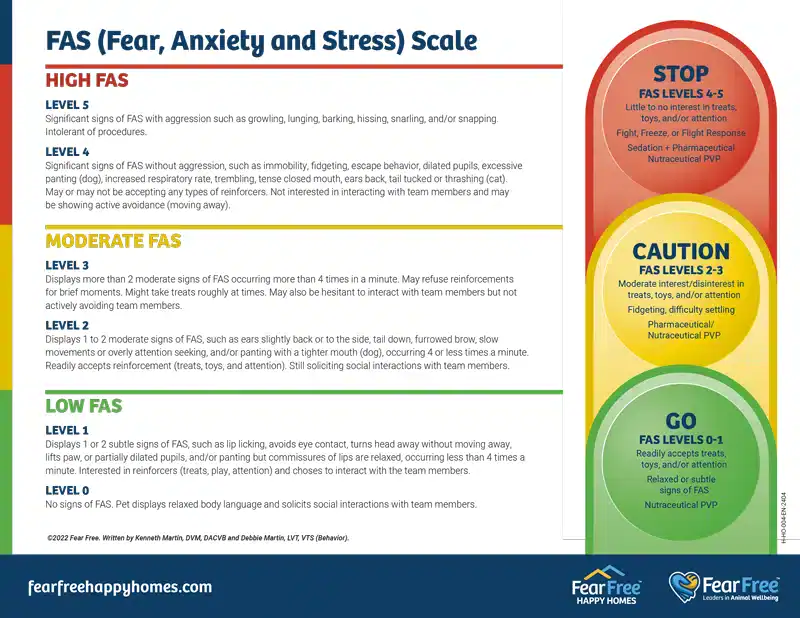
And remember: a fearful pet isn’t a “bad” pet. Fear and anxiety can change how an otherwise friendly animal behaves. Animals have the classic fight or flight responses that we have all heard of. When scared, many animals will choose to protect themselves. Even a pet who has never bitten, can resort to biting if pushed far enough. Along with reducing that level of fear for your pet, fear free handling and altered techniques result in a safer experience for our staff and veterinarians.
Treats and Positive Reinforcement
One of our favorite Fear-Free tools is something many pets already love: treats!
When appropriate, we use high-value treats and positive reinforcement to help create pleasant associations with the veterinary experience.
A treat after walking into the exam room, during an examination, or following a procedure can help teach your pet that good things can happen at the veterinary hospital.
In our hospital you will find a treat bar above the scale- this is the first stop for dogs once they enter. In the exam room and in the treatment areas there are hard treats, peanut butter and cheese for the dogs and lickable squeeze treats for cats.
For some pets, food is especially powerful. For others, praise, toys, affection, or simply being allowed to stay close to their owner may be more meaningful.
We look for what works best for each individual pet. If your pet has an irresistible treat or a beloved toy, bring them along! Anything we can do to reduce anxiety is a win!
Gentle Handling and Less Restraint
Traditional veterinary handling sometimes relies on physical restraint to keep a pet still.
While restraint is necessary for safety, our goal is to use the least amount of restraint necessary whenever possible.
Gentle handling can help reduce fear and allows us to work with a pet rather than against them.
Whenever possible, we may allow a pet to remain in a position where they feel comfortable. A dog may feel more relaxed sitting next to their owner rather than being forced onto an examination table. A cat may be more comfortable remaining in or near their carrier during part of an examination.
Small adjustments can make a big difference.
Sometimes We Take a Break
Not every examination needs to happen all at once.
If a pet becomes overwhelmed, taking a short break can give them an opportunity to relax and regain their confidence.
We may pause, offer a few treats, allow some quiet time, or change our approach.
Our goal isn’t to “win” a battle with a nervous pet. It’s to provide the care they need while minimizing unnecessary fear and stress.
Occasionally we may decide it is in your pet’s best interest to stop for the day. Once we have escalated to a level 10 of fear or anxiety there is no way to win them back quickly. Changing our approach and reconvening on another day can make all the difference in the world.
Happy Visits
One of the simplest ways to change a pet’s perception of the veterinary hospital is to visit when nothing scary is happening.
A happy visit is a brief trip to the hospital that doesn’t involve an examination or procedure. Your pet may simply come in, meet members of our team, receive some treats, and head back home.
These visits can help create positive associations with the hospital.
Instead of thinking, “Every time I come here, something uncomfortable happens,” your pet can begin to learn, “Sometimes I come here and good things happen!”
For particularly anxious pets, these positive experiences can be an important part of building confidence over time.
Every Pet Gets an Individualized Approach
There isn’t one approach that works for every dog or cat.
A confident Labrador may happily accept treats and attention from the veterinary team, while a nervous Chihuahua may need more time and space. One cat may be comfortable being examined on the table, while another may feel safest remaining in the bottom half of their carrier.
Fear-Free care means recognizing those differences and adapting when we can.
For pets with significant anxiety, we will also discuss additional strategies, including pre-visit medications. Some people are leery of “drugging” their pets. Please understand, the medications we choose will help to reduce the actual fear and anxiety your pets feel leading to a more relaxed demeanor. Doses can be adjusted to manage any sedative side effects that may occur.
Fear-Free Care Is About More Than One Appointment
Reducing fear, anxiety, and stress isn’t something that happens overnight.
For some pets, it may take several positive experiences before they become comfortable at the veterinary hospital. That’s okay.
Every calm interaction, every treat, every successful examination, and every positive experience helps build trust.
Our goal is to make veterinary care a more positive experience—not only for your pet, but for you and our veterinary team as well.
A Calmer Visit Starts With Trust
Your pet’s emotional well-being is an important part of their overall health.
By slowing down when necessary, paying attention to body language, using positive reinforcement, practicing gentle handling, and creating individualized plans, we can help make veterinary visits more comfortable and less intimidating.
Fear-Free care is a team effort. You know your pet best, and we know veterinary medicine. Together, we can help your pet feel safer and more confident when they come to see us. This process needs to start early. We implement these techniques from our first visit with your pet, hopefully before the effects of stress and anxiety have developed.
If your pet has already developed these associations, it is important that we intervene as early as possible in this stress cycle. We understand that your schedules are tight and return visits can be challenging to schedule. By working together and trusting our recommendations to make each visit more relaxed, we can provide better care for your pet.
If your pet has experienced fear or anxiety during previous veterinary visits, let our team know when scheduling your appointment. The more we understand about your pet, the better we can prepare to make their next visit a positive one.
ICYMI: Read part 1 of our Fear Free series here: How to Prepare Your Pet Before the Appointment.
Read more about what goes into developing a Fear Free practice and find other helpful resources at https://www.fearfree.com/
Lindsay Baker, DVM