

Arthritis in Dogs and Cats- What Every Owner Should Know
They once could chase a ball for 3 hours without tiring, now you watch them slow down on their walks after 10 minutes. At one time there was no frisbee that couldn’t be caught, now we need help getting on the couch. “He’s just getting old” we all say as we normalize the changes we see. But here’s the real truth: age is not a disease, but arthritis sure is! According to the Canine Arthritis Research and Education foundation recent research shows that 40% of dogs under the age of 4 years old have evidence of arthritis on x-rays. About half of these dogs show symptoms of pain associated with arthritis. Unfortunately, most dogs aren’t diagnosed with arthritis until they are 8-10 years old. Read on to discover why and how arthritis is making changes to your pet’s joints and what we can do to slow the progression.
How Does a Normal Joint Work?
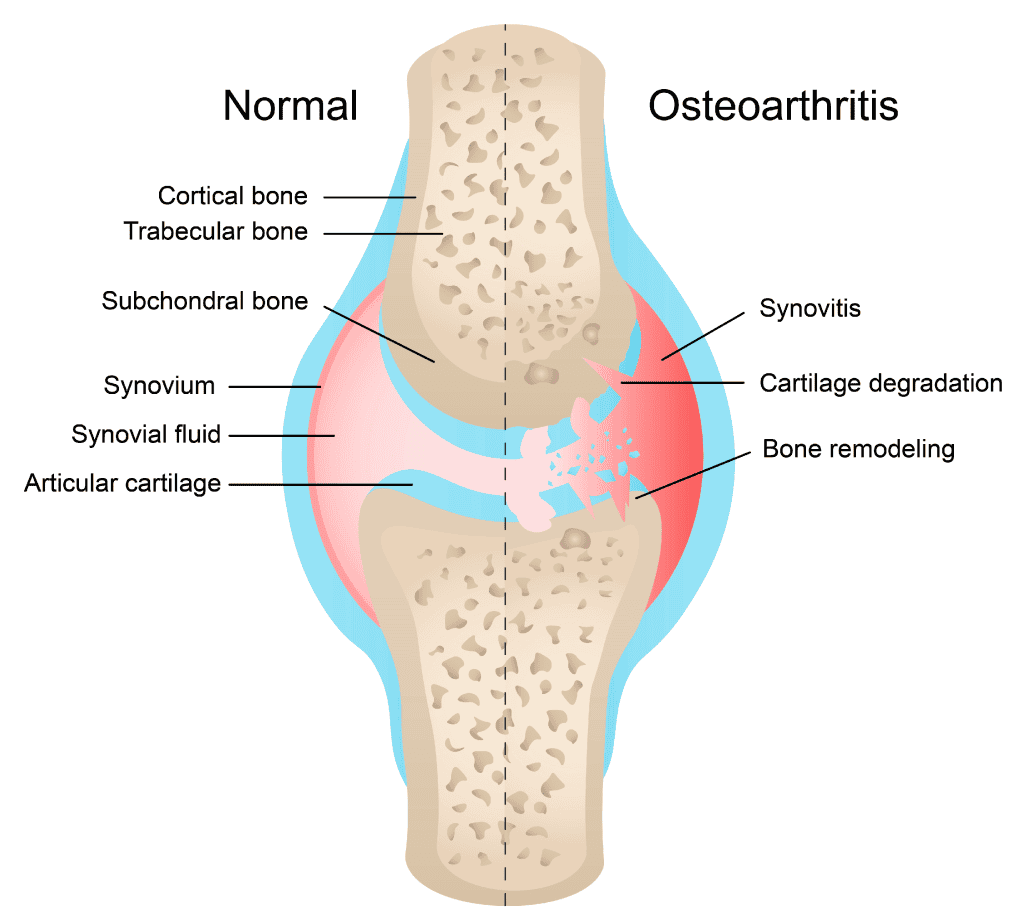
Let’s start by understanding the anatomy of a joint. I’ll try not to bore you with a science lesson, but it is important to understand how each component contributes to mobility. The joint is where two bones meet at a hinge or rotational socket. Cushioning each end of bone is cartilage. The cartilage is super tough but smooth and allows the bones to glide over each other smoothly. The synovial membrane produces joint fluid which brings nutrients to the cartilage and acts as a lubricant for the moving parts. These parts are all sealed and protected from the rest of the body by a joint capsule. Depending on the type of joint, there are also ligaments that span from 1 bone to the other to help stabilize the joint and keep the bones aligned, allowing movement.
Isn’t Arthritis Normal for an Old Dog or Cat?
Day in and day out, year after year of use and these parts all start to age and wear. So while yes, arthritic changes are a typical part of the aging process, it is still considered a degenerative disease with options for prevention, maintenance, and treatment.
The Progression of Arthritis:
- An injury to the joint occurs or age-related deterioration begins.
- The once lubricating joint fluid begins to thin and decrease in volume.
- Friction on the cartilage surface creates a rough and brittle texture.
- The entire joint becomes inflamed, further decreasing joint fluid integrity and deteriorating cartilage.
- In response, the bone begins to thicken and creates rough new bony protrusions called osteophytes.
- As cartilage becomes completely lost, we are left with painful, irregular bone on bone rubbing.
Who is Affected by Arthritis?
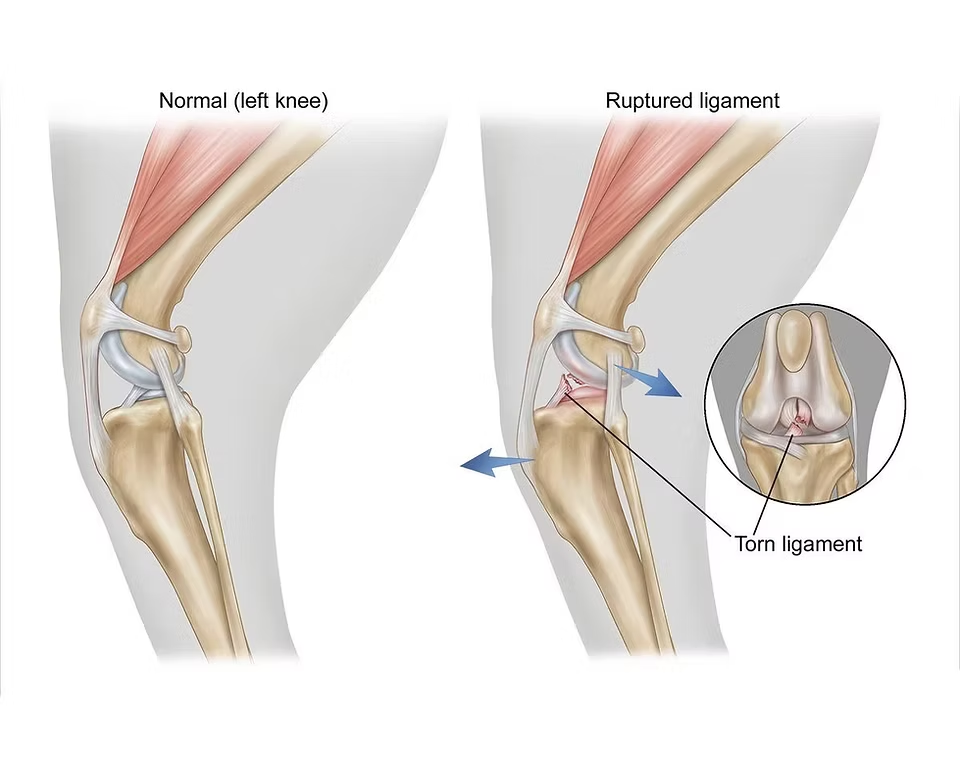
We all can expect some degree of joint deterioration as a product of aging but significant arthritic changes are seen after an injury occurs. Ligament strains and sprains are common in dogs, especially our very active and muscled breeds. The most common injury we see is a cranial cruciate ligament tear of the knee. This is the same injury as an ACL tear in a person. The tear of the ligament incites major inflammation that wreaks havoc on the joint. If the joint is not stabilized with surgery we will see chronic inflammation of the knee and more aggressive progression of arthritis.
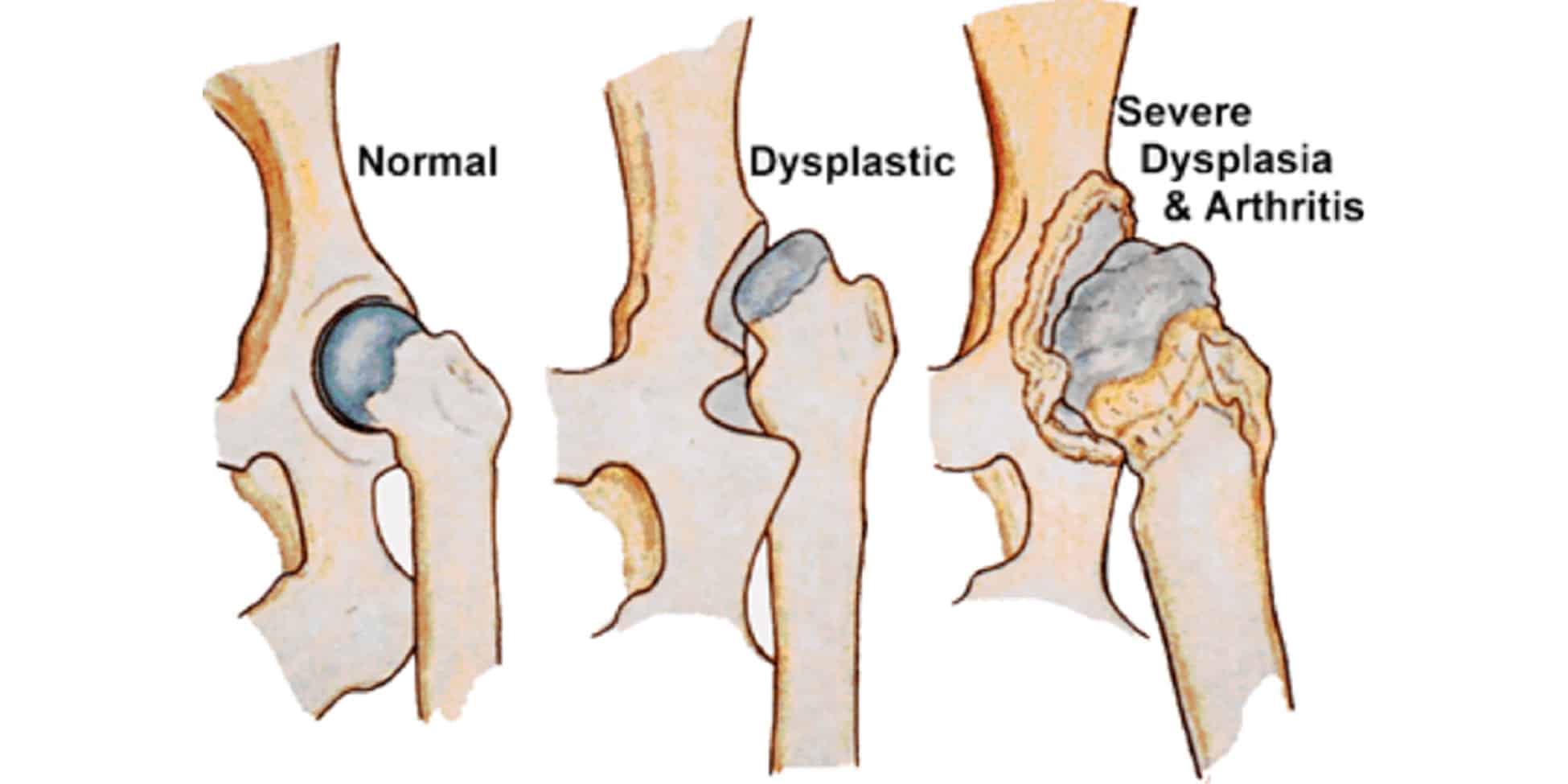
Some dogs are born with joint irregularities that set them up for disaster! Hip dysplasia and elbow dysplasia are genetic conditions in which the joint did not form correctly from birth. The animal uses the joint in an irregular way causing excessive wear and tear on portions of the joint that were not made for that purpose. The process of arthritis development is the same as with age-related changes but at a much younger age, even as early as 1 year old! While any breed can be affected, the breeds most commonly found to develop arthritis are the Labrador Retriever, German Shepherd, Golden Retriever, Bulldog, and Rottweiler.
Another myth we should dispel is the idea that their loss of mobility does not signify pain. Arthritic pain is not the same as a broken bone or other stabbing acute pain so we are not going to see our pets scream or cry out as they try to move. But if you have personally suffered from arthritis you can agree that there is significant pain associated with movements, especially as the disease grows more advanced. If the disease weren’t painful, we would not seek radical joint replacement surgeries for ourselves to improve our own quality of life.
Symptoms of pain in animals can be different from symptoms in people and may look like:
- Not getting up to greet you any longer
- Does not want to go for walks any more or lags behind on walks
- Is limping or not putting weight on a leg
- Struggling to go up or down stairs
- Having trouble getting up from laying down
- Can no longer jump in the car or on the couch
- Drags their feet on walks
Check out this article for an even more comprehensive list of symptoms of pain in animals.
For animals, they only want to feel good and run and jump and play just as they always did. When those habits decline, it is because those movements now cause pain, so they avoid the activity to avoid the pain.
Do Cats Suffer From Arthritis?
While we definitely see arthritic changes more in our canine patients, cats are not immune. In fact, the degree of arthritic change and pain associated is severely underappreciated in cats as they are lighter on their feet and better at hiding their level of discomfort. Symptoms in the cat may appear as loss of interest in seeking high places or use of vertical scratching posts. Normal cat behavior is to seek out the highest perch in the room. If your cat no longer uses their cat tower, stops jumping on countertops, or seems to pull themselves up on the couch instead of jumping then they are likely suffering from the pain of arthritis.
Why Should I Be So Worried About Arthritis in My Pet?
The trickiest part of arthritis management is understanding that it is an irreversible, progressive disease. Once established- there is no reversing the damage that has been done. Early detection and interventions are aimed at improving the health of each component of the joint so that we can slow down the vicious cycle.
But don’t despair, your pets aren’t doomed! If you have noticed a progressive slow down or other change in behaviors in your own dog or cat then bring them in for an assessment. From there, we can formulate the right treatment plan for them.
Stay tuned next month as we will explore all the options available for arthritis management and what might work for your pet.
Lindsay Baker, DVM